
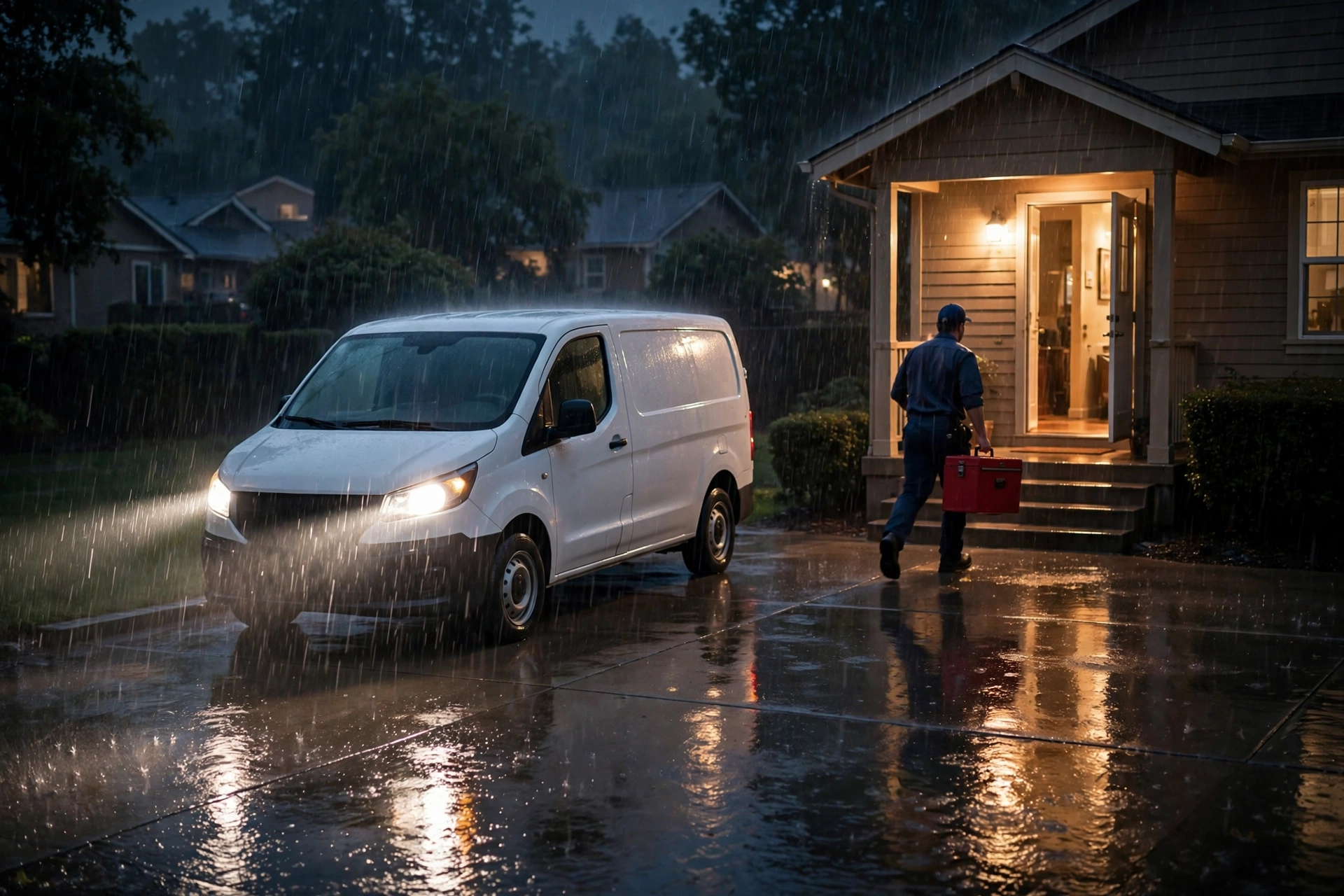
A burst pipe does not wait for business hours, and neither do the customers searching for help. At 11:47 PM, standing in an inch of water, nobody is browsing the third page of Google or comparing portfolios — they type “emergency plumber near me,” call the first business that looks trustworthy, and book whoever answers first. That single moment is what emergency plumber SEO is really about: being the business that shows up and looks like the safe choice when urgency is at its peak.
Emergency searches behave nothing like regular plumbing searches. A “water heater installation” query has a research phase; an emergency query is decided in under a minute. That changes the playbook — your rankings matter less than your visibility in the map pack, your reviews matter more than your homepage, and your phone number matters more than your logo. Here is how emergency plumber SEO works in 2026, step by step.
Why Emergency Plumber SEO Is a Different Game
Most plumbing companies treat emergency keywords like any other service page — add “24/7” to the title, publish the page, and wait. That misses how Google handles urgent local searches. Understanding the differences below is the foundation of effective emergency plumber SEO.
1. The map pack decides the winner. For “emergency plumber near me” searches, the Google Business Profile map pack dominates the screen — especially on mobile, where most emergency searches happen. A business ranked #1 organically but #4 in the map pack loses to competitors who own the local pack.
2. Proximity is the heaviest factor. Google knows an emergency plumber needs to be close. For urgent searches, the searcher’s physical location weighs more than it does for planned services. You cannot rank in a neighborhood you genuinely do not serve — which means honest service-area configuration matters more than keyword tricks.
3. Availability signals outrank everything else. A company marked “Open now” at 2 AM beats a better-reviewed company marked closed. Reviews with words like “came out at midnight” or “showed up within the hour” reinforce the emergency signal in your profile. Every part of your emergency plumber SEO should scream we actually answer.
4. Click-to-call beats website visits. Panicking customers call, they do not read. Google shows your phone number directly in the map pack — so a mobile-friendly site with a sticky call button and an answering system that works at 3 AM are not extras, they are the conversion path.
Step 1: Turn Your Google Business Profile Into an Emergency Machine
Your Google Business Profile is the single most important asset in emergency plumber SEO. Before touching your website, make the profile undeniably the best emergency option in your service area.
Set honest 24-hour availability
Mark your hours as 24 hours only if a human actually answers around the clock — an answering service or on-call rotation counts. A profile marked open that dumps callers into a full voicemail is worse than one marked closed, because the bad experience lands in your reviews. Set holiday hours honestly; “closed on Thanksgiving” looks trustworthy, not lazy.
Choose the right categories and services
Set your primary category to “Plumber” and add “Emergency Plumber” as an additional category. Then list emergency services explicitly: burst pipe repair, water heater emergency, sewer backup, gas leak response (if licensed). Each named service is another signal for Google about what you offer.
Collect emergency-specific reviews
Not all reviews are equal for emergency plumber SEO. A review saying “great guy, fair price” is nice — one saying “called at 1 AM and he was here in 40 minutes” is a conversion machine. After every emergency call, ask the customer to mention the situation in their review, and follow the same system for getting more Google reviews that keeps the pipeline steady.
Step 2: Build Emergency Service Pages That Convert
Do not make one generic “services” page; build focused pages for emergency intent.
One page for the emergency hub, one per major scenario
Start with a dedicated “/emergency-plumber/” page targeting the core keyword, then add supporting pages for the highest-volume emergency searches in your market: burst pipes, sewer backup, water heater failure, gas leak. Each page should follow the same structure — what counts as this emergency, what to do in the first five minutes (shut off the main valve), and a prominent call button. Linking these pages together builds topical authority that strengthens your whole site.
Write for a panicking human, not a search bot
Emergency pages fail when they read like brochures. The visitor is stressed, on a phone, possibly watching water spread across the floor. Lead with the call button and one sentence: “24/7 emergency plumber in [City] — average arrival time 45 minutes.” Then the details. Keep paragraphs short, use plain language, and put the phone number where a thumb can reach it without scrolling.
Speed is a ranking factor and a survival factor
A page that takes six seconds to load on a phone loses the panicking searcher — and Google measures that. Compress images, cut unnecessary scripts, and test on a real mobile connection, not just your office Wi-Fi. Follow our website speed checklist for small businesses to get Core Web Vitals into shape; for emergency pages it is worth doing first, before any other speed work on the site.
Step 3: Win the “Near Me” Signal Honestly
There is no shortcut to proximity ranking, but most plumbers leave easy gains on the table.
Set a truthful service area. Define the cities and zip codes you can genuinely reach at 2 AM — overclaiming a 60-mile radius hurts twice: Google weighs claimed distance against real behavior, and a customer who waits 90 minutes leaves a review that says so.
Use location pages sparingly and honestly. If you genuinely serve five suburbs, five well-written location pages with real local content (common local plumbing issues, your arrival times) are fine. Fifty thin “emergency plumber in [town]” pages spun from one template will eventually cost you more than they earn.
Build local citations and links. Consistent name, address, and phone number across directories (Yelp, Angi, BBB, local chambers) reinforces Google’s trust in your location. Local sponsorships and property-manager partnerships earn the links that move proximity rankings — the same approach behind our local SEO services for trades.
Step 4: Local Services Ads — the Emergency Fast Lane
Above the map pack on emergency searches, Google often shows Local Services Ads (LSAs) — the “Google Guaranteed” listings. You cannot SEO your way into this spot; you buy in with a background check, license verification, and insurance. For emergency plumbers, this is often the highest-ROI paid channel available.
LSAs charge per lead, not per click. Unlike Google Ads where you pay for every tap (including competitors and job seekers), LSAs bill you when a customer actually calls or messages through the ad. For emergency plumbing, where one job can be worth $500-$2,000+, the math frequently works even at $30-$60 per lead in competitive markets.
Your LSA profile needs the same care as your GBP. Business hours, service types, review count, and response rate all show in the ad unit. Plumbers who answer fast and hold high ratings rise to the top of the LSA carousel — which is the first thing a panicking searcher sees. Treat it as a product to optimize, not a set-and-forget campaign.
Pair LSAs with organic, don’t replace it. LSAs can be paused for verification reviews and lead volume fluctuates. The map pack and your emergency pages are assets you own. The strongest setups run both: paid speed today, owned visibility forever.
Step 5: Answer the Phone — the Unsexy Ranking Factor
Here is the part of emergency plumber SEO that no tool can automate: someone has to pick up. Google tracks how often LSA calls are answered and factors responsiveness into ad ranking. Customers who reach voicemail at midnight call your competitor — and sometimes leave a one-star review about the unanswered call, which quietly damages your map pack standing.
Set up a real after-hours system: an on-call rotation with a dedicated emergency line or a professional answering service that can dispatch — not just take messages. Review your missed-call log every morning like a sales report, because for emergency plumbing it is one. Even a simple automated text-back (“We got your call — a tech will call you within 10 minutes”) keeps a caller from dialing the next listing.
How Long Does Emergency Plumber SEO Take?
Honest timeline: GBP optimizations and review collection can move your map-pack visibility in 4-8 weeks. Emergency service pages typically need 2-4 months to rank for competitive “near me” terms. LSAs can generate calls within days of verification approval. Anyone selling guaranteed #1 rankings in a week is selling something else entirely — usually ads, or wishful thinking.
The compounding effect is the real prize. Every emergency call you answer becomes a review; every review strengthens your map-pack position; every higher position brings more calls. Competitors who rely on ads alone reset to zero every month. Your visibility keeps building.
FAQ: Emergency Plumber SEO
What is emergency plumber SEO?
Emergency plumber SEO is the practice of making a plumbing company visible for urgent searches like “emergency plumber near me” — primarily by optimizing the Google Business Profile for the map pack, building fast emergency service pages, and earning emergency-specific reviews.
How much does emergency plumber SEO cost?
DIY costs nothing but time; most small shops do GBP optimization, review generation, and basic service pages in-house. Professional local SEO for plumbers typically runs $500-$2,000/month depending on market competition — our plumber website cost guide covers the full budget picture. LSAs are separate and bill per lead, often $30-$60 in competitive US markets.
Can a one-truck plumber rank for emergency searches?
Yes — arguably better than a big company. Proximity is the dominant factor, and a solo operator serving one town honestly can outrank a regional chain’s satellite listing. The keys are an optimized GBP, fast answering, and emergency-specific reviews, not company size.
Should I run Google Ads or LSAs for emergency plumbing?
Start with Local Services Ads: pay-per-lead beats pay-per-click for emergency intent, and the Google Guaranteed badge builds instant trust with panicking callers. Add traditional Google Ads only for keywords LSAs do not cover well, and keep building organic visibility underneath both.
Get a Free Website Audit
Wondering why your plumbing company is not showing up when neighbors search for help at midnight? Get a free, no-pressure website audit — we will review your Google Business Profile, emergency pages, and call setup, then show you what is holding back your emergency visibility.
Prefer to talk it through? Message us on WhatsApp at +91 84494 87961.