
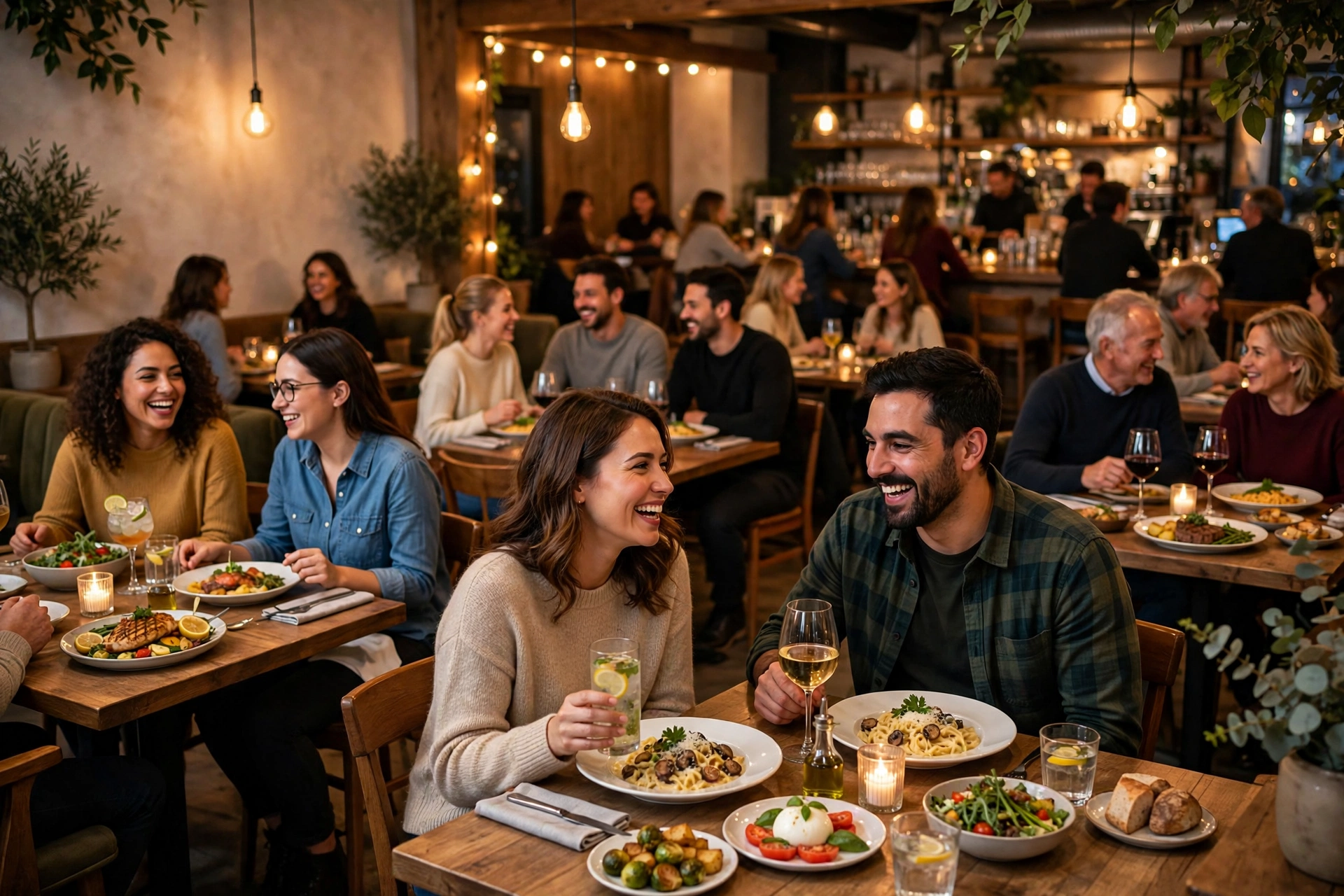
Two restaurants sit on the same street. Same rent, same menu prices, same neighborhood. At 7 PM on a Friday, one has a line out the door — the other has three tables. The difference is rarely the food. More often, it’s where each restaurant chooses to advertise.
If you’re a restaurant owner trying to decide between Facebook ads vs Google ads for restaurants, you’re asking the right question — but most of the answers online are written by agencies trying to sell you both. This guide gives you the honest breakdown: how each platform actually works for restaurants, what they cost, and how to spend a limited budget without wasting it.
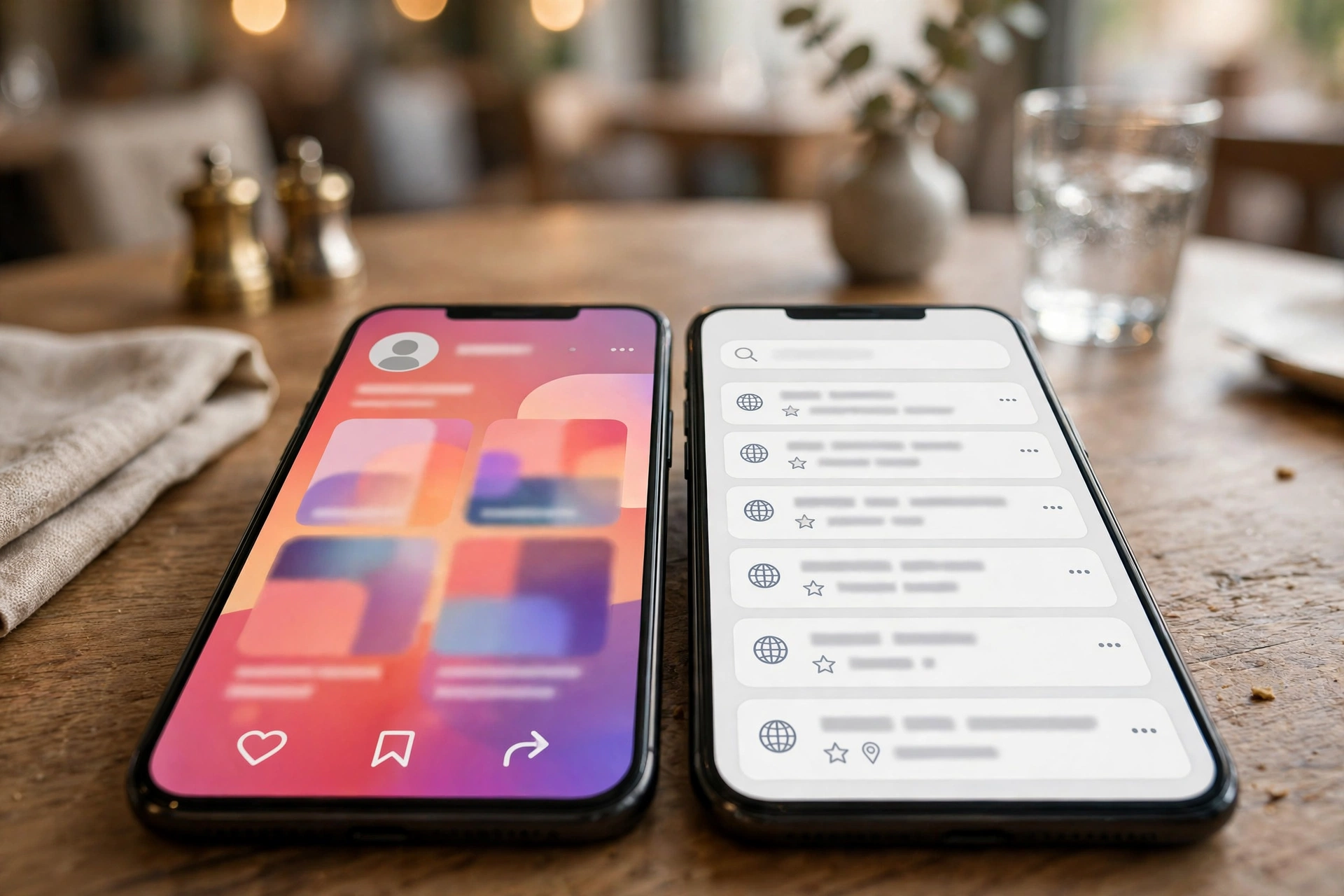
Short answer: For most restaurants, Google Ads wins when you need tables filled now — it captures people already searching for somewhere to eat. Facebook and Instagram ads win for building awareness, promoting events, and bringing regulars back. The smartest 2026 budgets use both, in that order. The full comparison is below.
How Google Ads Works for Restaurants
Google Ads captures people at the moment of intent (Google Ads Help has setup guides for new advertisers). Someone types “pizza near me,” “best sushi downtown,” or “restaurants open now” into their phone — and they’re ready to eat, usually within the hour. They aren’t browsing; they’re deciding.
For restaurants, this makes Google the closest thing to standing outside your door with a menu. Your ad appears above the map and organic results when hungry people search in your area. Google Maps visibility through your ad extensions can put directions, hours, and your phone number one tap away. In markets where they’re available, Local Service Ads add another layer of trust with verified badges.
The catch is cost. Google ads for restaurants typically run $1.50 to $4.00+ per click, and in competitive food markets (“best Italian restaurant Chicago”) it can climb higher. You pay a premium because you’re buying someone else’s moment of hunger — and that moment converts. Google traffic for restaurants converts at roughly 5-15%, far above almost any other paid channel.
How Facebook and Instagram Ads Work for Restaurants
Facebook and Instagram work the opposite way: they create demand instead of capturing it. Nobody opens Instagram looking for dinner — but a 15-second video of cheese stretching off a wood-fired pizza at 11:30 AM can manufacture a craving in someone who had no dinner plans.
This is discovery advertising. Facebook’s real strengths for restaurants are radius targeting (you can show ads only to people within 1-5 miles), mouth-watering visuals that stop thumbs mid-scroll, event promotion (live music nights, tasting menus, holiday dinners), and retargeting people who visited your website but never booked.
Clicks are cheaper here — usually $0.50 to $2.00. But cheaper clicks don’t mean cheaper customers. Facebook traffic for restaurants converts at roughly 1-5%, because these people weren’t actively looking for food. You’re interrupting them, and most will keep scrolling.
The one thing Facebook demands that Google doesn’t: creative. Google needs a good offer and the right keywords. Facebook needs photography or video that makes people hungry. A blurry phone photo of your dining room won’t compete with a close-up of steam rising off fresh pasta.
Facebook Ads vs Google Ads for Restaurants: Side-by-Side Comparison
| Google Ads | Facebook / Instagram Ads | |
|---|---|---|
| How it works | Captures existing demand (“near me” searches) | Creates demand with visuals and offers |
| Typical CPC | $1.50–$4.00+ | $0.50–$2.00 |
| Conversion rate | 5–15% (high intent) | 1–5% (awareness stage) |
| Best for | Filling tables tonight; takeout and delivery orders | Building awareness, events, specials, loyalty |
| Speed of results | Fast — clicks turn into orders within hours | Slower — needs repetition before people act |
| Creative needs | Low — text ads and a good offer | High — quality food photos or video required |
| Targeting | Keywords + location | Radius (1–5 miles), interests, retargeting |
The Real Math: Cost Per Diner, Not Cost Per Click
Here’s the mistake that burns most restaurant advertising budgets: comparing platforms by cost per click. CPC is a vanity metric. What matters is cost per diner — how much you spend to get one paying customer through the door.
Run the numbers:
- Google: $2.00 CPC × 10% conversion = $20 per customer
- Facebook: $0.50 CPC × 2% conversion = $25 per customer
The “cheaper” platform just cost you more per actual diner. Now flip it: if your average diner spends $45 and your margins are healthy, $20 per acquired customer is a bargain — they’ll come back, bring friends, and order again. But if your average ticket is $12, even $20 per customer is hard math.
So before you choose a side in the facebook ads vs google ads for restaurants debate, answer one question: what is one new customer worth to you? Multiply your average check by how often customers return. That number — not the CPC — decides your budget and your platform.
And give any campaign 3-4 weeks of testing before you judge it. The first week of any ad account is the algorithm learning; judging at day five is like reviewing a dish before it’s finished cooking. Track reservations and orders, not clicks and likes.
Facebook Ads vs Google Ads for Restaurants: When Each One Wins
Neither platform wins everywhere. Here’s the honest split:
Google wins when: you’re a new restaurant nobody knows about yet; you depend on takeout and delivery; you’re in a tourist area where people search “restaurants near me” constantly; you want tables filled tonight, not next month.
Facebook wins when: you’re promoting an event (wine night, live music, Mother’s Day brunch); you have a visually stunning menu or dish that photographs well; you’re running a limited-time special and need it in front of locals fast; you want to retarget people who visited your site or engaged with your page.
The common wisdom among restaurant marketers: Google is essential, Facebook is supplementary. A typical split is roughly 70% Google and 30% Facebook — Google captures the hungry searchers, Facebook fills the seats for events and keeps regulars coming back.
A Starter Budget Plan: $500/mo and $1,500/mo Examples
One warning first: a tiny budget spread across both platforms usually fails on both. Start with one, prove it works, then expand.
$500/month: Start with Google
- $400 — Google Search ads on high-intent keywords: “[cuisine] near me,” “best [cuisine] [your neighborhood],” “restaurants open now”
- $100 — Simple retargeting or a small Facebook test with one strong food photo and one offer
At $500, Facebook alone rarely generates enough reach and frequency to move the needle. Google gives you the best shot at actual tables.
$1,500/month: The Two-Platform Split
- $1,000 — Google Search ads (core keywords + “near me” variations), with call and location extensions
- $300 — Facebook/Instagram video or carousel ads promoting a weekly special or event to a 3-mile radius
- $200 — Retargeting across both platforms: people who visited your menu or reservation page but didn’t book
Facebook starter budgets generally run $300-$500/month, Google $500-$1,000/month. These numbers aren’t magic — they’re enough to gather real data in 3-4 weeks so you can decide with evidence, not guesses.
Running Both the Smart Way
When you’re ready for both, don’t run them as two separate campaigns. Run them as one system:
- Google captures the intent. Bid on the keywords your hungry neighbors are already searching.
- Facebook captures the attention. Show crave-worthy visuals to people within a few miles, especially before meal-planning hours.
- Retargeting closes the gap. Someone clicks your Google ad but doesn’t book? Your Facebook ad reminds them at dinner time. Someone watches your Instagram video? Your Google ad catches them when they search later.
- Measure one thing. Reservations and orders — by channel. If Google drives 80% of your bookings, don’t split the budget 50/50 out of fairness.
And keep your Google Business Profile claimed, accurate, and loaded with great photos — it’s free, it feeds your Maps visibility, and it makes every paid click convert better.
Frequently Asked Questions
How much should a restaurant spend on ads?
Most independent restaurants spend 3-6% of revenue on marketing, with paid ads as part of that. In practice: $500/month minimum to get meaningful data from one platform, $1,000-$1,500/month to run both properly. Below $300/month, you’ll learn nothing — the sample size is too small to judge. Spend what lets you test for 3-4 full weeks.
How long until I see results from restaurant ads?
Google Ads can drive orders within days, because you’re capturing existing demand. Facebook typically needs 3-4 weeks of consistent exposure before awareness turns into visits. Don’t judge either platform before a month of testing — and measure reservations and orders, not impressions or clicks.
Do I need professional photos for restaurant advertising?
For Google Search ads: no — text ads do the job. For Facebook and Instagram: yes, effectively. Food advertising is won or lost on the image, and a $200-400 local food photography session can pay for itself many times over in ad performance. If that’s out of reach, shoot in natural daylight, get close to the food, and skip the flash.
Should I boost posts or run real ads?
Run real ads in Ads Manager (the Meta Business Help Center has step-by-step setup guides). Boosted posts are the fast-food version of Facebook advertising — easy, but with limited targeting, limited placements, and no proper conversion tracking. Real campaigns let you target a tight radius, retarget website visitors, and measure actual reservations. The extra 20 minutes of setup is worth it.
The Bottom Line
The facebook ads vs google ads for restaurants question doesn’t have one answer — but it does have a right order. Google is where hungry people already are; start there if you need tables filled now. Facebook is where you make people hungry; add it when you’re ready to build awareness, promote events, and bring regulars back.
Compare cost per diner, not cost per click. Give each platform a real 3-4 week test. And measure the only metric that pays the rent: butts in seats.
Get a Free Website Audit. Your ads are only as good as the website and Google profile they send people to. Get a free audit of your restaurant’s online presence and see exactly what’s costing you customers — contact us here or reach out on WhatsApp at +91 84494 87961.
Want to see what we offer for local businesses? Browse our restaurant marketing services and transparent pricing plans — no surprises, no jargon.
Pingback: Facebook Ads Cost for Local Business (2026 Guide)